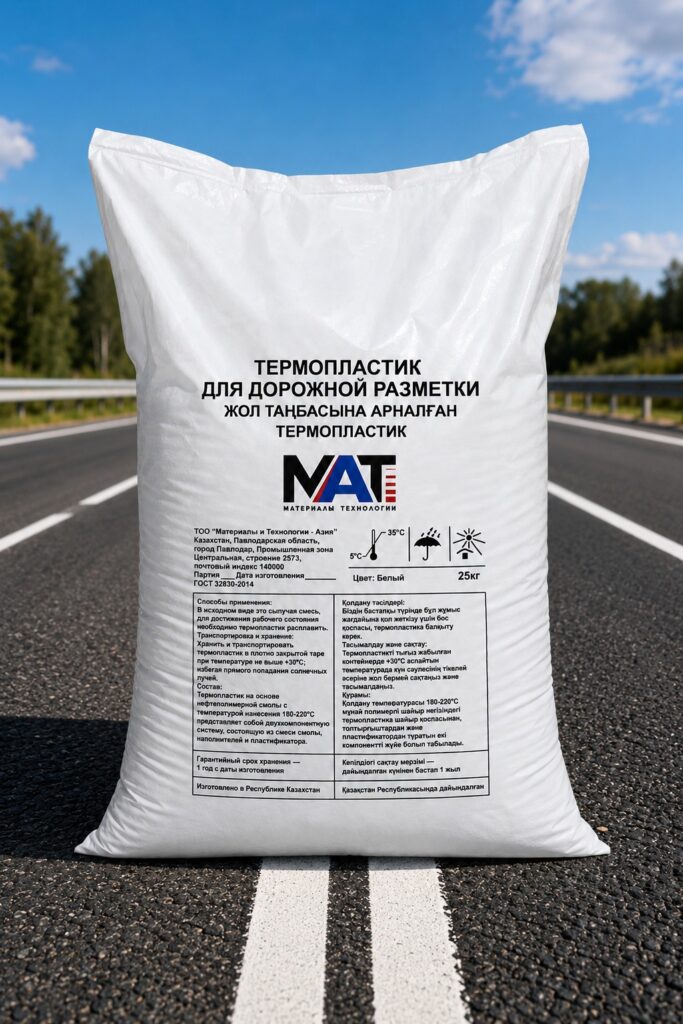
THERMOPLASTIC
THERMOPLASTIC FOR ROAD MARKING
Thick-film coating for marking city streets and intercity highways with heavy traffic flow. Forms a durable, bright line resistant to climatic temperature fluctuations, wear, and de-icing chemicals.
Application Methods and Purpose
Universal
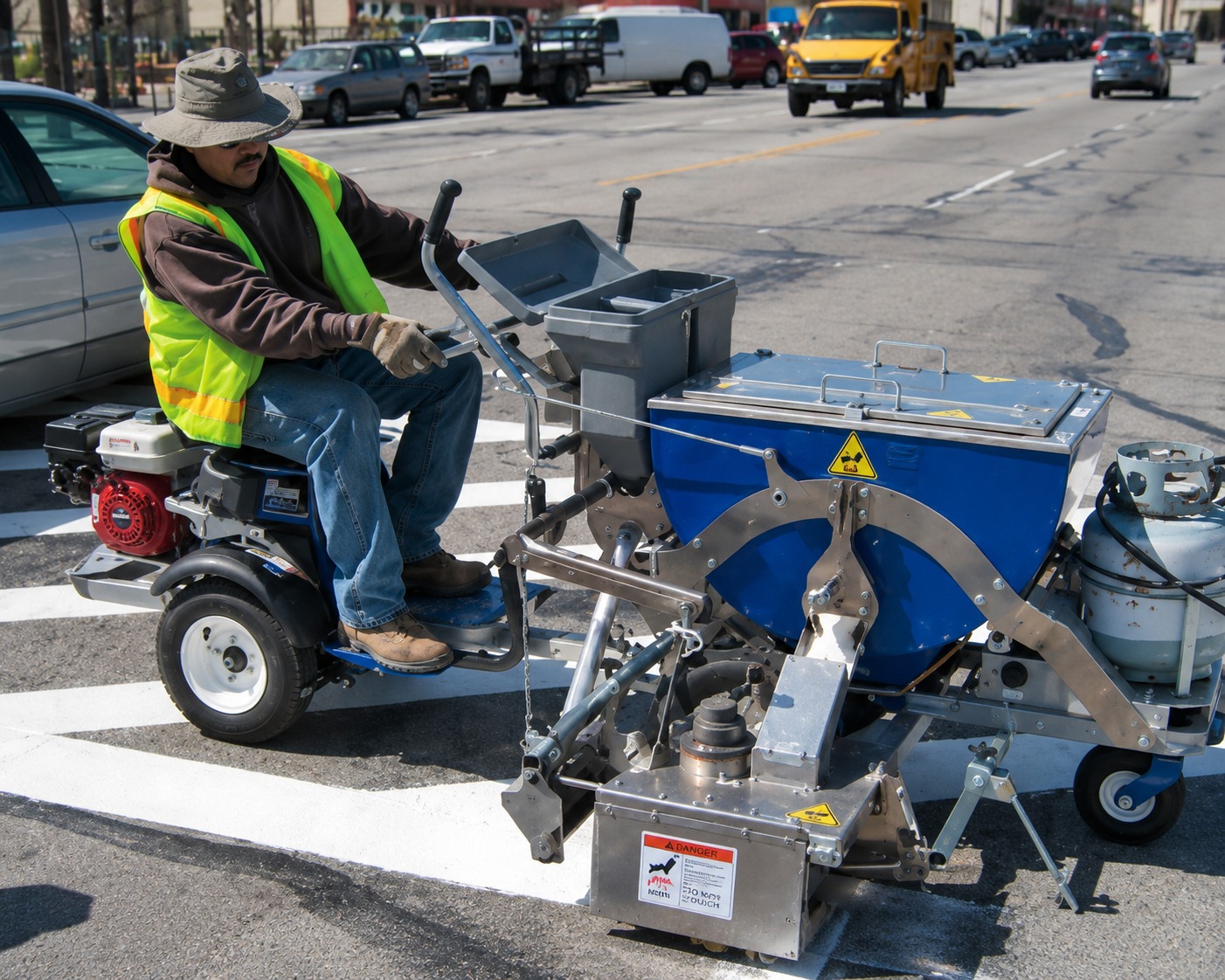
For solid and intermittent lines, stop lines and pedestrian crossings. Suitable for extruder-type road marking machines and manual application carts.
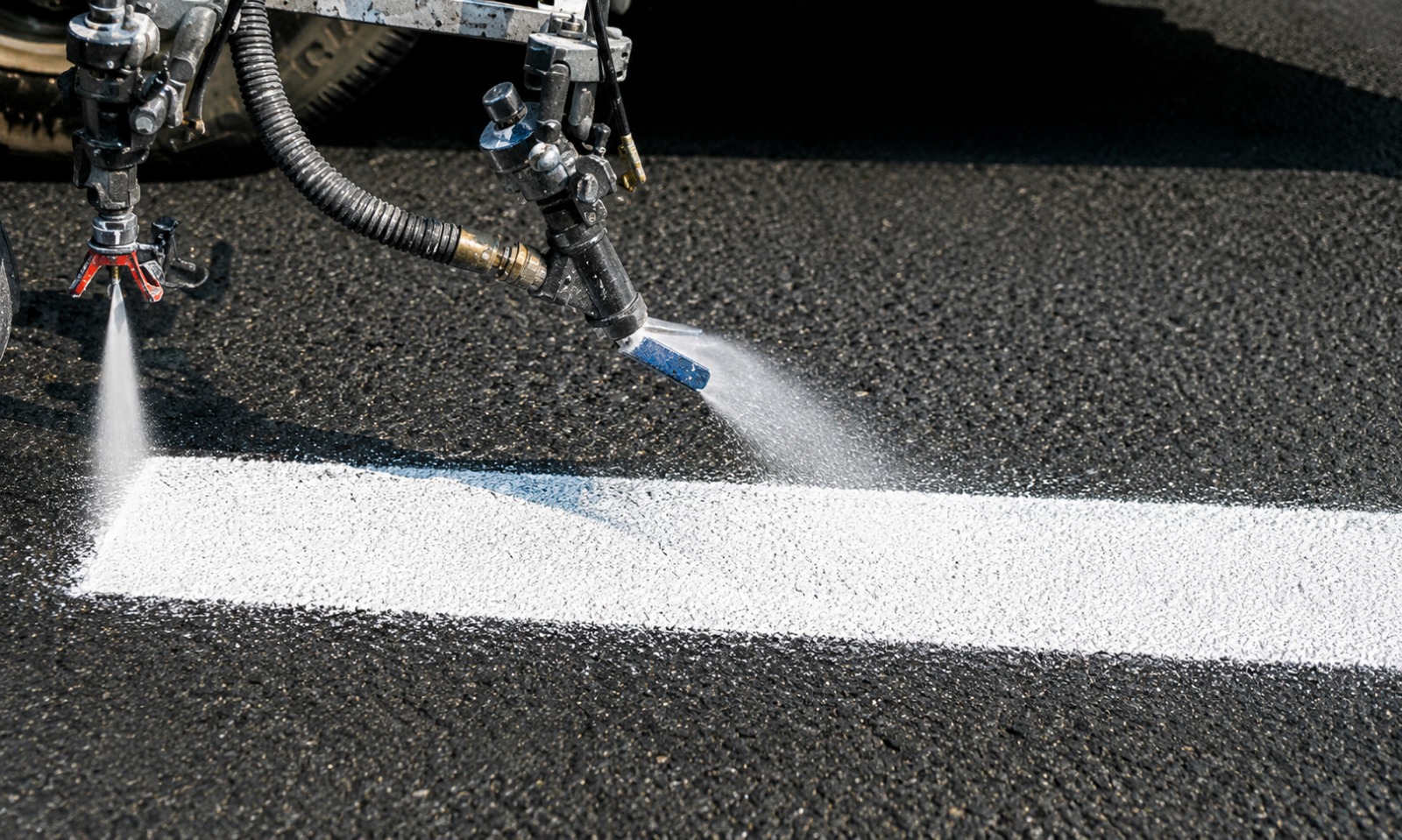
Spray Thermoplastic
Increased melt flowability for rapid road marking renewal. Applied by spraying through nozzles.
Structural / Profile
Special formulation that retains its shape after application. Used to create structural (drop) and profile road markings.
Available Options
By Glass Bead Content:
- Premix (glass beads incorporated into the mass): Glass beads are incorporated during production to provide retroreflectivity as the marking wears.
- Without Glass Beads: Standard base formulation (surface glass bead application is ordered separately).
By Climatic Conditions:
- ❄️ For Northern Regions: Formulation designed for operation at low temperatures.
- ⛅ For Temperate Climates: Standard seasonal temperature variations.
- ☀️ For Hot Regions: Formulation designed for high summer temperatures.
Technical Specifications and Colours
Yellow (Luminance ≥ 50%)
Application Rules and Conditions
Dry weather, ambient temperature not lower than +10 °C, humidity up to 80%. On new asphalt — 14 days after laying.
Load into the kettle at ~+150 °C and heat to 180–190 °C with constant stirring.
Average 6–8 kg per 1 m², depending on layer thickness and application technology.
Full Set of Documentation
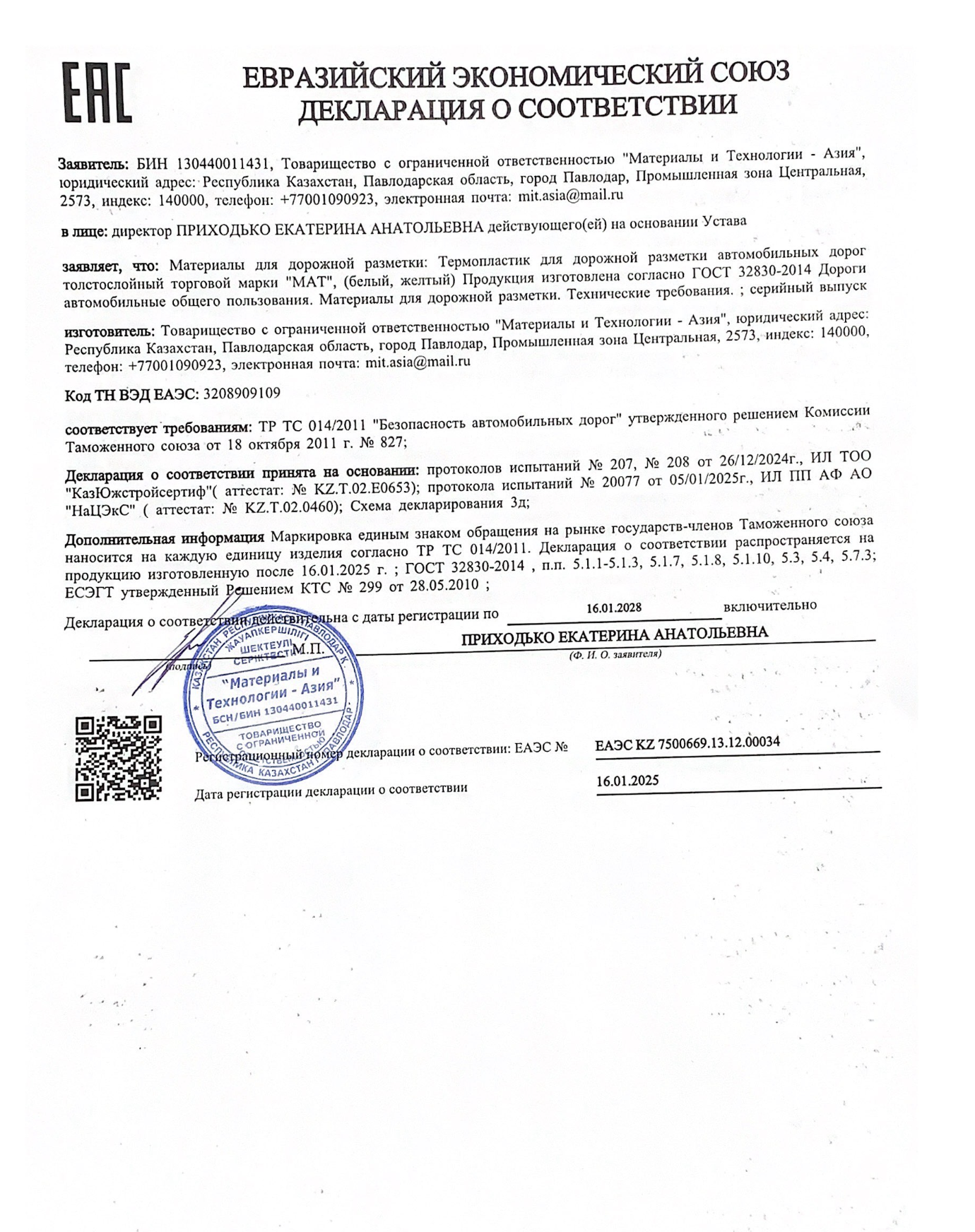
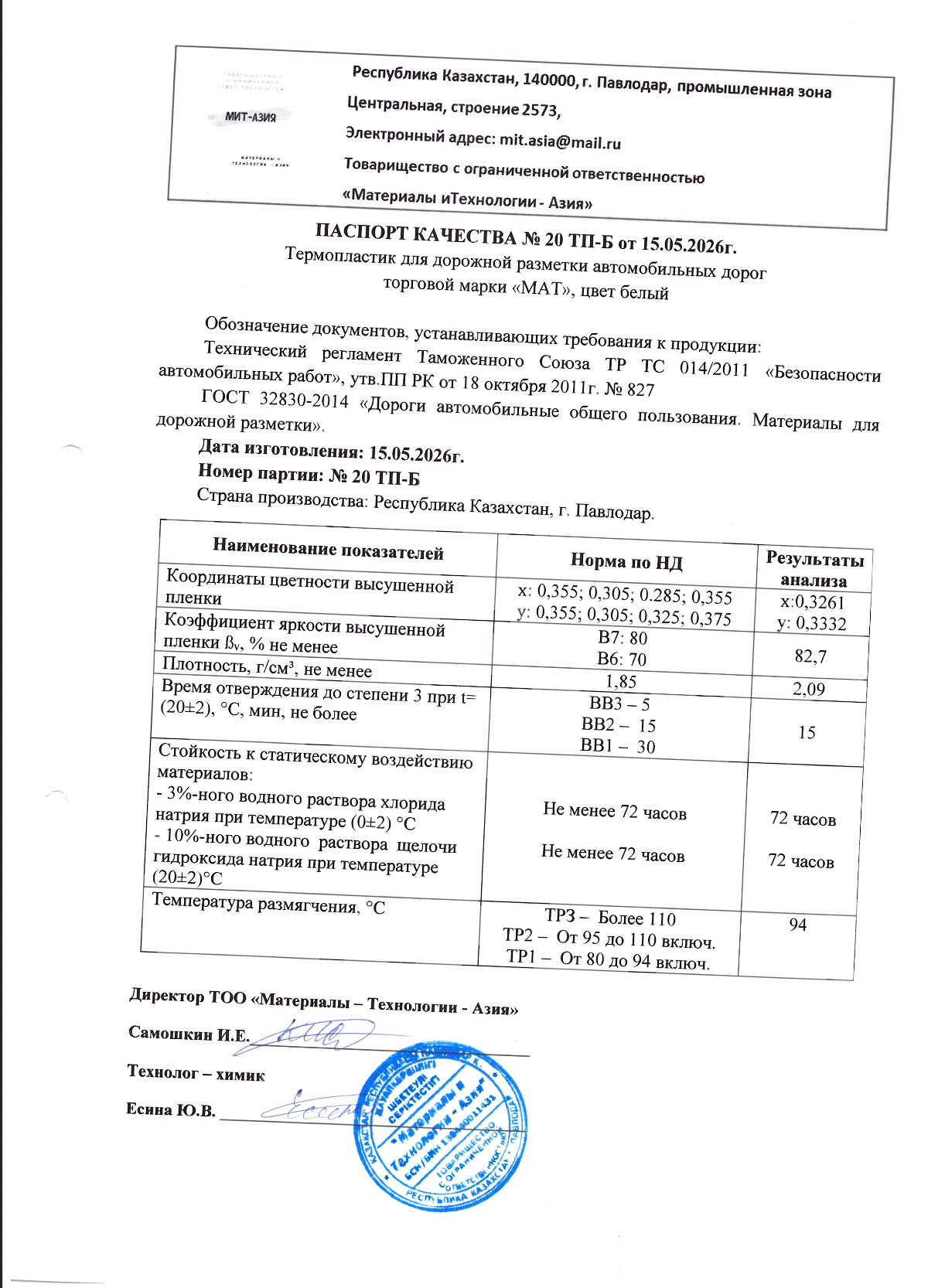
We promptly provide quality certificates, TR CU 014/2011 declaration and test reports (TDS).
🧪 Quality Certificate